Category: DRC

Africa and the Future of the Global Economy

Investment, Human Capital, and Strategic Partnerships in the 21st Century

Author: Dorcas Buzigire George
Founder & CEO, Primoveo LLC
March 2026

Africa’s demographic growth, strategic resources, and expanding markets will make the continent one
of the most consequential actors in the global economy over the next three decades.

Executive Summary

Africa is expected to become one of the most influential regions shaping the global economy in the
coming decades. United Nations projections suggest the continent’s population could reach
approximately 2.5 billion people by 2050, representing nearly one quarter of the global population.
Africa’s growing workforce, expanding consumer markets, and strategic mineral resources are
increasingly central to global economic discussions. At the same time, Africa faces significant
development challenges, including infrastructure gaps, governance constraints, and workforce
development needs. Strategic partnerships between governments, investors, development institutions,
and civil society organizations will be essential for unlocking the continent’s economic potential. This
policy brief highlights three pillars necessary for sustainable growth: human capital development,
responsible resource management, and strengthened governance institutions.

Key Takeaways

  • Africa’s population could reach 2.5 billion by 2050.
  • The continent will represent roughly one quarter of the global population by mid-century.
  • Africa holds major reserves of minerals essential for the energy transition.
  • Africa faces an infrastructure financing gap estimated between $68 and $108 billion annually.
  • International partnerships will be essential for sustainable economic growth.

Africa’s Demographic Transformation

Africa’s demographic expansion represents one of the most significant structural shifts in the global
economy. The continent has the youngest population in the world, creating both opportunities and
challenges. With the right investments in education, workforce training, and healthcare systems,
Africa’s growing labor force could become one of the most powerful engines of global economic growth.

Strategic Resources and Global Supply Chains

Africa plays a critical role in global supply chains linked to the energy transition. Minerals such as
cobalt, lithium, copper, and rare earth elements are essential for batteries, renewable energy
technologies, and advanced electronics. Responsible resource governance will be essential to ensure
that global demand for these materials also supports sustainable development across the continent.

Infrastructure and Investment Gaps

Despite its economic potential, Africa continues to face significant infrastructure constraints.
Investments in transportation networks, energy systems, and digital connectivity are essential to
improving productivity and enabling economic diversification. Closing infrastructure gaps will require
coordinated action among governments, development institutions, and private investors.

Governance and Institutional Capacity

Strong governance systems and institutional capacity are essential for sustainable economic
development. Transparent legal frameworks, predictable regulatory systems, and effective public
institutions create the conditions necessary for long-term investment and economic stability.

Key Challenges

  • Infrastructure deficits
  • Governance constraints
  • Climate vulnerability
  • Uneven access to education and workforce training
  • Geopolitical competition over natural resources

Policy Recommendations

  • Invest in human capital development through education and workforce training.
  • Promote responsible resource development and transparent supply chains.
  • Strengthen governance institutions and regulatory frameworks.
  • Expand international investment partnerships.
  • Invest in infrastructure and digital connectivity.

Questions for Policymakers and Investors

  • How can global partnerships support sustainable development while ensuring local economic
    benefits?
  • What strategies can accelerate investment in human capital development?
  • How can governance frameworks be strengthened to attract long-term investment?
  • What role should international institutions play in closing infrastructure gaps?

About Primoveo
Primoveo LLC is a Washington-based strategic advisory and business development platform focused
on strengthening economic partnerships between Africa, the United States, and Europe. Through policy
insights, strategic dialogue, and partnership development, Primoveo supports initiatives that promote
responsible investment, human capital development, and sustainable economic growth.
Reflections on the Hearings: Advancing Peace in the DRC and Rwanda Through the Washington Accords

Dorcas George, International Human Rights Legal Practitioner and Humanitarian, originally from Eastern Democratic Republic of the Congo (DRC)
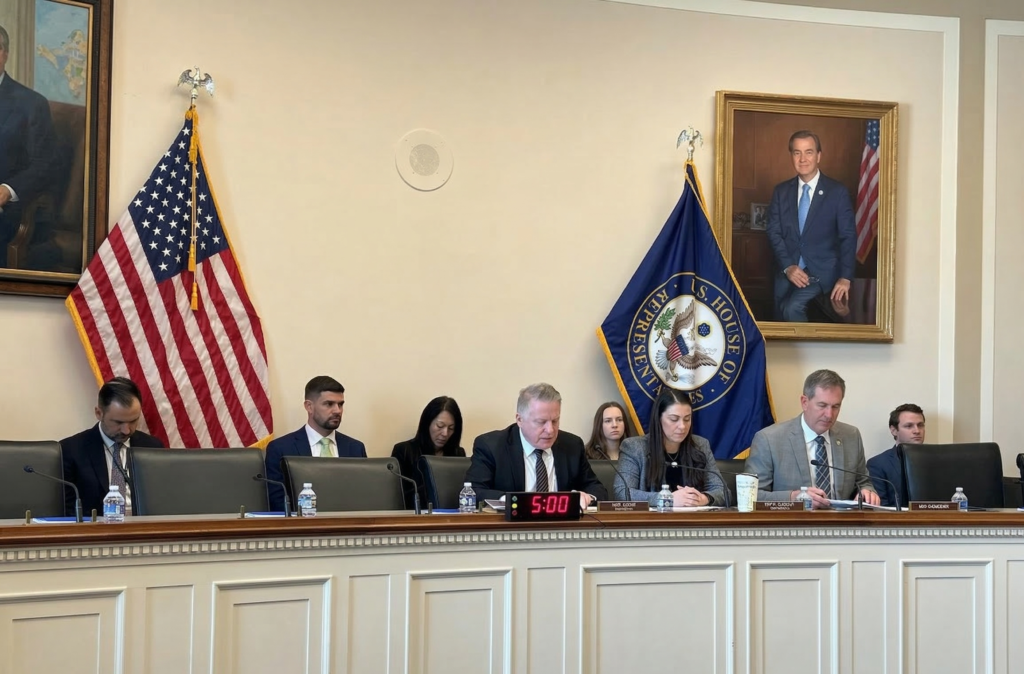
22 JANUARY 2026 U.S. House Hearing - Advancing Peace in DRC and Rwanda in the DRC and Rwanda Through President Trump’s Washington Accords chaired by Congressman Chris Smith
U.S. House of Representatives Africa Subcommittee Hearing: Advancing Peace in DRC and Rwanda in the DRC and Rwanda Through President Trump’s Washington Accords chaired by Congressman Chris Smith (February 2026)

Introduction

I attended two recent U.S. House Congressional hearings on Advancing Peace in the DRC and Rwanda through President Trump’s Washington Accords. As an international human rights legal practitioner and humanitarian originally from Eastern Democratic Republic of the Congo (DRC), I welcomed the seriousness with which Members of Congress and witnesses engaged in questions of peace, mineral governance, humanitarian stability, and regional security.

The Washington Accords represent a meaningful, historic diplomatic development. Renewed and sustained U.S. engagement has reinforced regional mediation, strengthened the principle of territorial integrity, and linked stability to economic integration. These are important steps forward. Durable peace, however, will require implementation that integrates governance reform, accountability, human capital investment, and meaningful community inclusion in addition to economic cooperation.

I. The Strategic Significance of the Accords

The hearings highlighted the importance of stabilizing Eastern Congo, a region central to global supply chains for cobalt, coltan, copper, and other critical minerals. U.S. engagement aims to secure rare earth and other critical minerals, reduce reliance on strategic competitors, while promoting regional economic integration.

Instability in Eastern DRC remains elusive because it is multidimensional. While international tensions play a significant role, internal governance weaknesses, armed group proliferation, institutional fragility, economic opportunism, and local grievances are also key drivers. Addressing cross-border dynamics without strengthening domestic institutions can only offer temporary, fragile stabilization rather than lasting peace.

II. Governance and Institutional Anchoring

Durable peace requires functioning institutions. Weak judicial systems, fragmented security forces with shifting allegiances, corruption, and inconsistent enforcement have allowed cycles of violence to regenerate over decades.

The Strategic Partnership between the United States and the DRC can be strengthened by anchoring it with institutional benchmarks rather than political alignment alone. Clear expectations tied to transparency, anti-corruption safeguards, rule-of-law reinforcement, and measurable governance improvements will strengthen reform incentives while protecting both Congolese citizens and U.S. strategic interests.

III. Human Capital: The Foundational Pillar

The Strategic Partnership appropriately recognizes that cooperation must move beyond mineral extraction and incorporate longer-term investments in human capital, infrastructure, and community benefit-sharing. These investments will bring an enduring stability that will help protect U.S. interests and access to strategic resources.

In conflict-affected mining regions, limited access to education, vocational training, healthcare, and economic opportunity contributes to reliance on substandard and hazardous mining practices. Investment in education systems, workforce development, women’s economic participation, healthcare infrastructure, and local enterprise growth can help address these issues and while improving long-term stability.

IV. Child Protection and Ethical Supply Chains

Addressing child labor in artisanal mining is a critical issue and requires strengthened traceability and transparency mechanisms alongside coordinated international regulatory standards to address it effectively. Regulatory enforcement alone is not enough. It must be accompanied by humanitarian and community development to ensure vulnerable children are in school rather than being forced into the workforce as free labor.

V. Justice, Accountability, and Inclusion

Peace processes are only effective when they integrate accountability mechanisms and inclusive participation. Strengthening judicial capacity, monitoring ceasefire compliance, bolstering survivor-centered support systems, and maintaining transparent oversight structures are examples of beneficial mechanisms that reinforce legitimacy and reduce relapse risk. Inclusion of women leaders, structured civil society institutions, and faith networks also can enhance implementation credibility and strengthen societal buy-in.

Conclusion

The Washington Accords represent a turning point for U.S. policy vis-à-vis the DRC, and is an important diplomatic milestone on a pathway to a brighter, more peaceful and prosperous future for the DRC, while helping the U.S. achieve its strategic resource access and supply chain goals. Long-term success, however, will depend on whether implementation integrates concepts such as institutional strengthening, human capital investment, ethical supply chain governance, accountability mechanisms, and inclusive participation.

From the perspective of Eastern Congo, peace is defined not only by ceasefires, but by functioning institutions, safe communities, legitimate governance, and children in classrooms rather than in mines. A Strategic Partnership that integrates human dignity with economic cooperation will best serve both Congolese and U.S. interests.

Author’s Note

As a Congolese-American international human rights legal practitioner with investigative and humanitarian experience in Eastern DRC, I remain committed to advancing implementation frameworks that translate diplomatic agreements into measurable progress in governance reform and human capital outcomes. Durable peace requires the expertise and diligence of those who deeply understand both local realities and international policy and diplomatic realities.

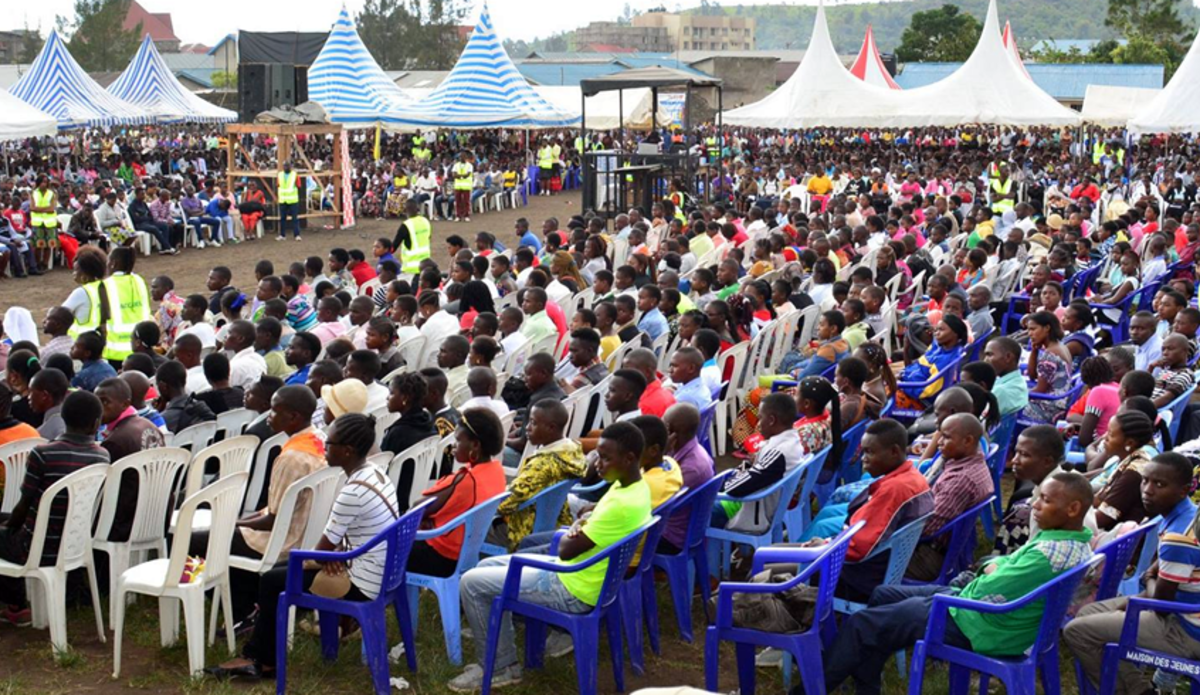
Youths gathering in Goma, eastern DRC, on the occasion of the 10th ICGLR Regional Multifunction Youth Forum (Ph. MONUSCO)

The DRC’s Demographic Trends – Powerhouse of Central Africa

Demographic Engine

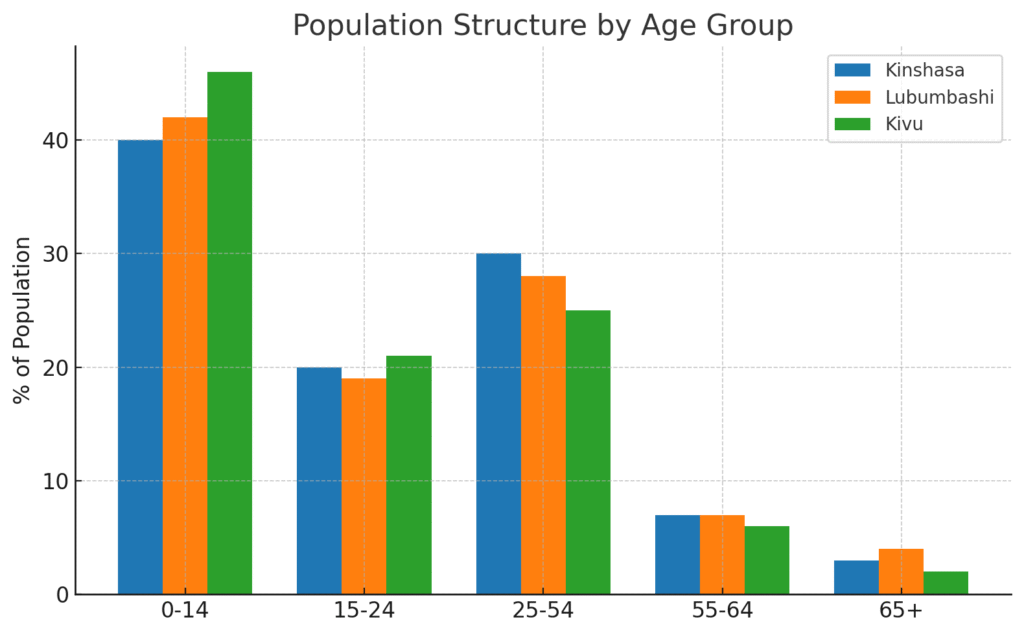
The Democratic Republic of the Congo (DRC) has one of the world’s fastest-growing populations. The UN puts the 2025 population at ~112.8 million, with an unusually young age structure: roughly 46% are under 15, and population would double in ~22 years if current growth persisted. The median age is about 15–16 years—among the world’s lowest. (United Nations Population Fund, DataReportal – Global Digital Insights)

Fertility remains high by global standards—nearly six births per woman on UN measures—which, combined with improving survival and urbanization, will keep the youth bulge large for decades. (UN WPP 2024 cites the DRC among the highest-fertility countries.) (World Population Prospects, World Bank Open Data)

Urbanization: where the demand concentrates

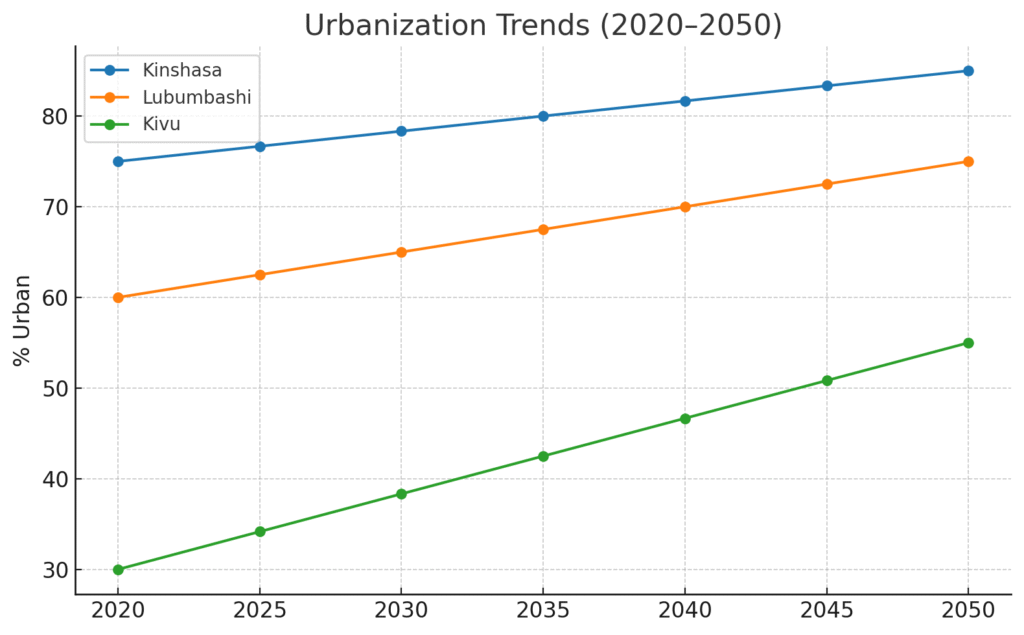
Urbanization is both rapid and durable. Around 48% of Congolese lived in cities at the start of 2024, and multiple UN/UN-Habitat briefs project a majority-urban DRC by mid-century—~60% urban by 2050 with a national population near 145 million. Kinshasa is already a megacity (~18 Million) and is frequently cited as potentially the continent’s largest in the 2030s, concentrating purchasing power in retail, housing, transport, and services. (DataReportal – Global Digital Insights, UN-Habitat, World Bank)

Education & human capital: progress with big gaps

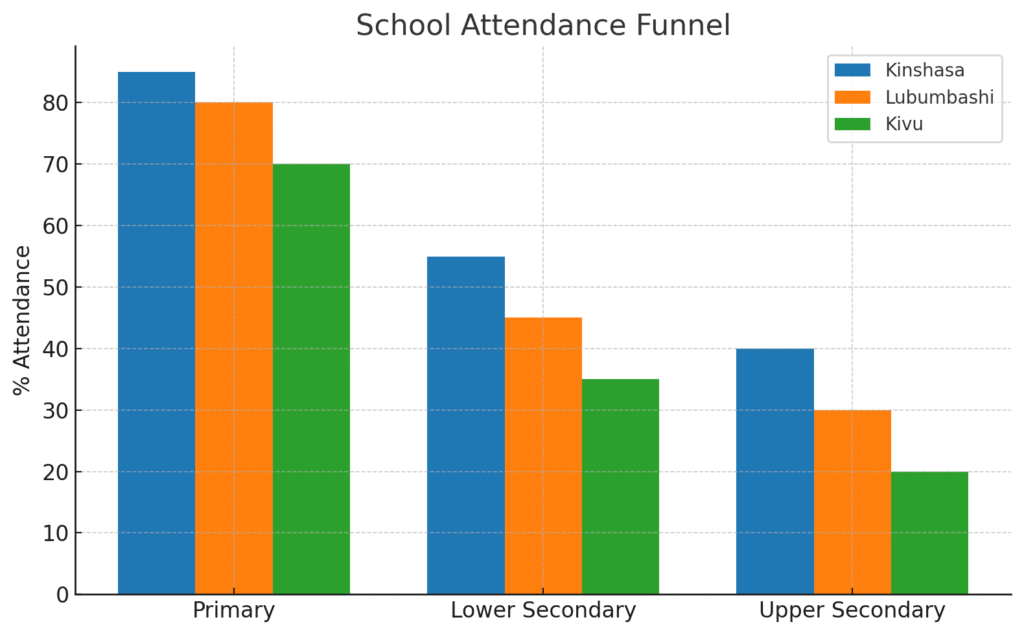
School participation has improved since the mid-2010s, but the pipeline narrows after primary grades. Primary completion reached roughly 79% for girls and 86% for boys (2021) on UNESCO’s UIS data. Yet attendance drops at higher levels: UNICEF reports ~78% primary attendance, ~32% lower-secondary, and ~34% upper-secondary (latest country dashboard). Adult literacy has trended upward to about 80% by 2022 on World Bank/UNESCO series. The picture is progress—but with sharp transition losses at the secondary stage that matter for tomorrow’s workforce quality and earnings. (iicba.unesco.org, UNICEF DATA, FRED)

Digital rails: the on-ramp to modern consumption

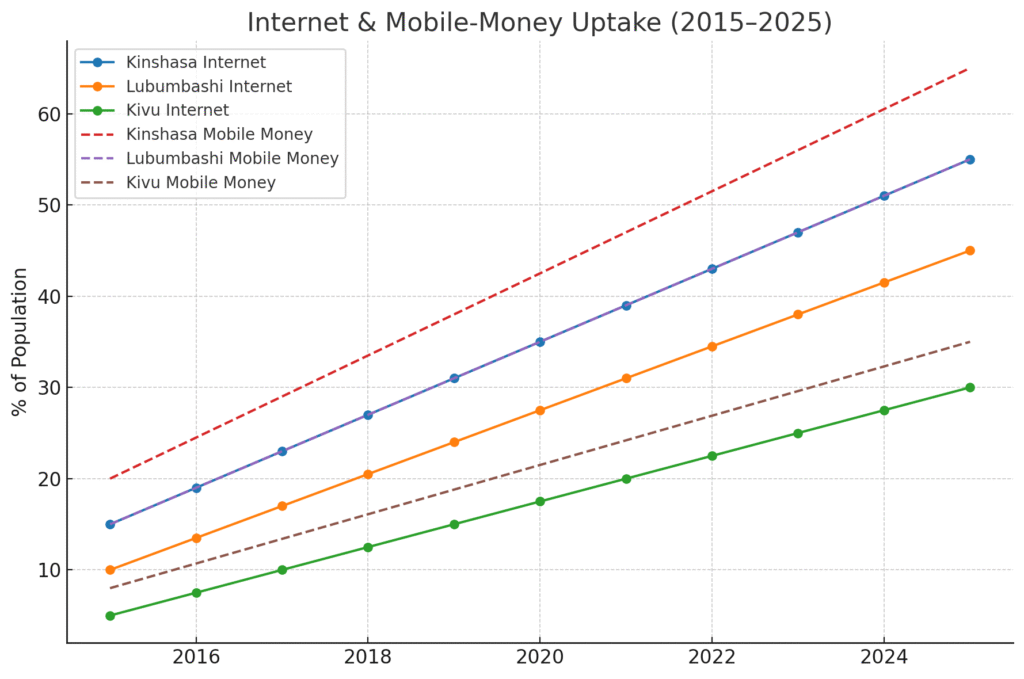
Connectivity is expanding quickly, creating distribution channels for everything from FMCG to finance and media. As of early 2025, the DRC had ~60.3 million active mobile connections and ~34 million internet users (≈31% penetration). Mobile money has surged too: the telecom regulator tallied 23.1 million mobile-money users in Q1 2024 (up from 18.2m a year earlier), deepening the rails for e-commerce, micro-credit, and bill payments. (DataReportal – Global Digital Insights, BANKABLE)

Today’s spending base—and why it can grow

Household consumption already drives the bulk of measured activity—~63% of GDP in 2023—typical of lower-income, commodity-exposed economies where private consumption is the core demand anchor. Still, purchasing power remains extremely constrained: the World Bank estimates ~73.5% of people lived under the $2.15/day extreme-poverty line in 2024, and recurrent conflict and displacement have elevated food insecurity (28 million facing acute hunger in early 2025). These headwinds shape the kinds of products that win—affordable, sachet-sized, and value-first—but also underscore the upside as incomes rise and stability improves. (TheGlobalEconomy.com, World Bank, Reuters)

How the consumer market is likely to evolve (2025–2035)

1) Youth-driven mass market, then a thicker lower-middle. The next decade brings tens of millions of new consumers into cities and into first-time formal markets (banking, ID’d SIMs, formal retail). Expect rising spend per capita first on essentials (staples, hygiene, basic health, telecom/data), then on “next essentials” (education, off-grid energy, transport, housing improvements). Global models (World Data Lab) point to a rising African consumer class; the DRC is a later but large entrant given its scale and urbanization trajectory. (World Economic Forum)

2) Urban retail footprints deepen. More organized retail in Kinshasa/Lubumbashi/Goma, expansion of proximity formats (minimarts, kiosks with digital inventory/float), and FMCG route-to-market modernization (DMS, e-ordering). Logistics players that can bridge port-to-city and city-to-neighborhood gaps will capture outsized value. (Urbanization sources above.) (UN-Habitat)

3) Digital leapfrogging continues. Low-cost Android, expanding 4G (and selective 5G) coverage, plus mobile money rails will push formalization: tuition and utility payments, micro-savings, pay-as-you-go solar, and BNPL-style school/health financing. Fintech/telecom bundles will keep ARPUs rising even at low ticket sizes. (DataReportal – Global Digital Insights, BANKABLE)

4) Education as a growth category. Continued demand for private low-cost schools, tutoring, exam-prep, and TVET—especially ICT, construction, logistics, and basic healthcare—given the big drop-off from primary to secondary and employers’ skill gaps. Providers that prove learning gains at low cost will scale. (UNICEF DATA)

5) Housing & neighborhood services. Urban growth fuels materials (cement, roofing, paints), basic fixtures, and community-level water/sanitation. Bundled services (e.g., solar + appliance financing; water kiosks + digital payments) can address affordability and cash-flow volatility. (Urbanization and poverty sources.) (UN-Habitat, World Bank)

6) Media & entertainment. A super-young, mobile-first audience will keep demand rising for short-form video, streaming bundles, sports, music, and gaming at ultra-low price points (ad-supported, telco-bundled, or community Wi-Fi). (Digital adoption sources.) (DataReportal – Global Digital Insights)

What could accelerate (or slow) the upside

  • Stability and macro management. Inflation and conflict are the big swing factors; easing either expands real disposable income and investable footprints. (Reuters)
  • Secondary education & skills. Raising transition and completion rates (especially for girls) would compound productivity and lifetime earnings. (UNICEF DATA)
  • Infrastructure & regulation. Power, roads, urban planning, and a predictable rule-set (for payments, consumer protection, and competition) are critical to scale distribution and reduce end-user prices. (World Bank/urbanization sources.) (Open Knowledge Repository)

Bottom line

The DRC’s consumer story is scale + youth + urbanization + digital rails—tempered by low incomes and fragility today. Over the next decade, the “mass market” should broaden in the biggest cities first, with steady formalization via mobile money and low-cost connectivity. Companies that design for affordability, solve last-mile logistics, and invest in skills and trust will be best placed to grow with the market as education outcomes and incomes gradually improve. (DataReportal – Global Digital Insights, UNICEF DATA)

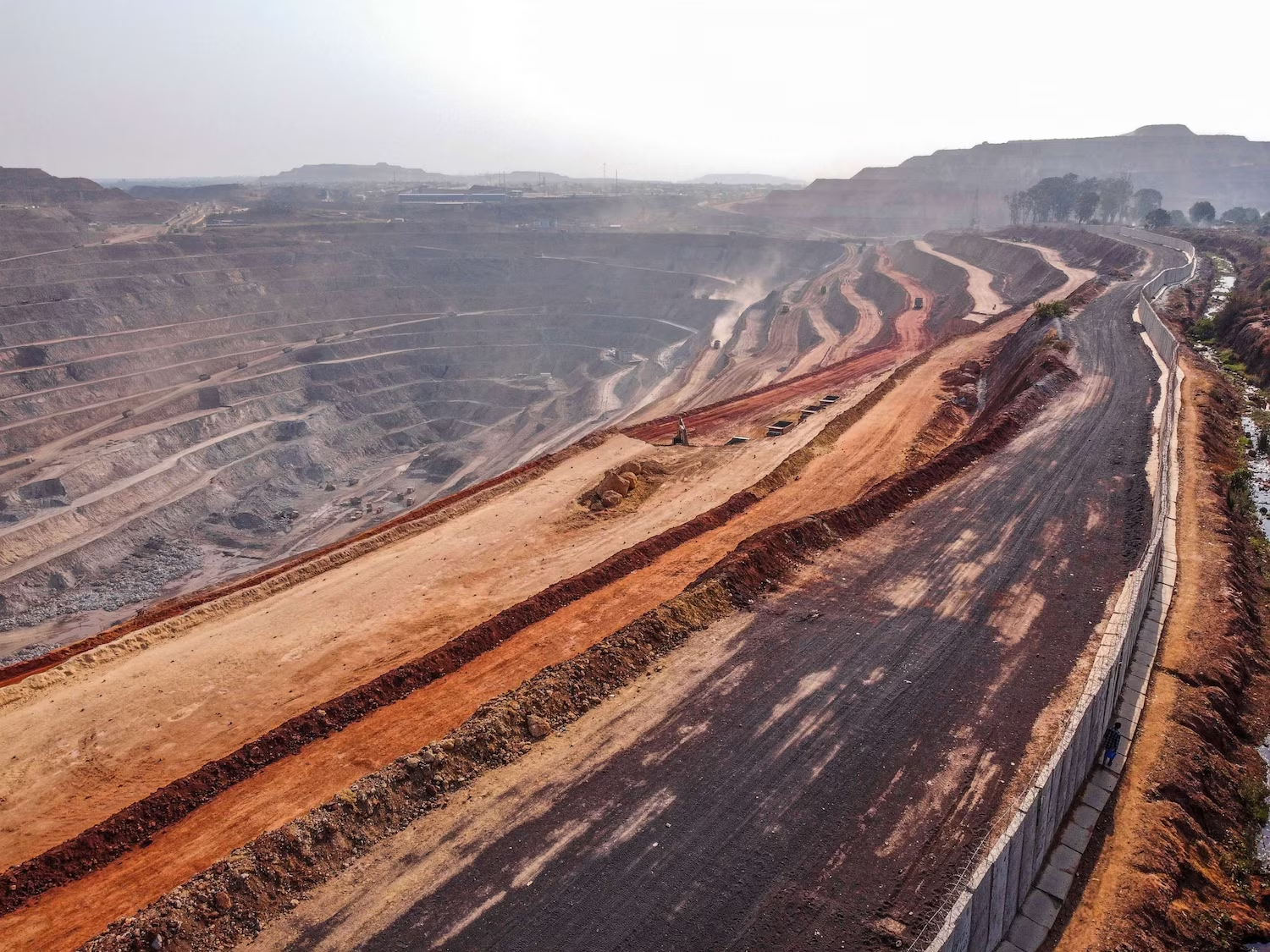
Kolwezi mine in the DRC

Kolwezi, DRC – Mining in Motion

Kolwezi, nestled in the heart of the DRC’s famed Katanga Copperbelt, remains a linchpin of global copper and cobalt production. Key industrial players include:

  • KOV (Kamoto Copper Company) — A major open-pit operation run by Glencore (75%) and Gécamines (25%), prized for its exceptionally high-grade copper ore.
  • Kolwezi Copper Mine — Operated by Zijin Mining, this major asset delivers roughly 120,000 tonnes of copper and 2,000 tonnes of cobalt annually.
  • Deziwa Mine, situated 35 km east of Kolwezi, is a large-scale copper-cobalt venture managed by China Nonferrous Metal Mining Group (51%) and Gécamines (49%). It holds estimated reserves of 4.6 million tonnes of copper and 420,000 tonnes of cobalt.
  • Pumpi Mine, another operational site about 70 km east, is a joint venture between China’s Wanbao Mining (75%), Morocco’s Managem (20%), and Gécamines (5%), producing both copper and cobalt.
  • Musonoi Mine, operating since the 1940s, remains active in extracting copper, cobalt, manganese, uranium, and rare mineral assemblages.

Resumption and Expansion of Activity

In May 2024, the DRC lifted a freeze on the COMMUS mine (controlled by Zijin) after radiation concerns were addressed, allowing full resumption of production—129,000 tons of copper and 2,200 tons of cobalt were produced in 2023.

Meanwhile, the Kamoa-Kakula Copper Complex is poised for renewed growth. As of June 2025, underground operations have resumed on the western side, with dewatering underway for eastern sections.


Kolwezi Tomorrow: Opportunities on the Horizon

A Surge in Foreign and Private Investment

Recent data shows that Congo attracted $130.7 million in exploration investment in 2024, more than any other African country—and now ranks 20th globally.

This demand reflects the exceptional ore grades and untapped economic potential of the Kolwezi region.

At the upcoming DRC Mining Week 2025, policymakers, investors, and innovators will converge to explore these transformative opportunities.

Infrastructure & Energy—Unlocking Growth

  • The Lobito Corridor rail project, backed by the U.S., EU, and G7, is set to link Kolwezi’s mining region directly to Angola’s Atlantic port—shortening export routes to the Western markets.
  • Meanwhile, the Kolwezi Solar Power Station, a proposed 100 MW solar plant, promises to modernize energy access and support industrial-scale mining with stable renewable power.

Employment & Economic Development

The mining sector—the DRC’s major employer—is projected to generate over 200,000 new direct jobs by 2030, particularly in Kolwezi and Lubumbashi regions. Such expansion promises meaningful economic uplift if matched with fair labor conditions.


A Closer Look: What Lies Ahead for Kolwezi

AreaCurrent SnapshotLooking Forward
Mining OperationsActive mines (KOV, Kolwezi, Deziwa, Pumpi, Musonoi)Kamoa-Kakula expansion, commodity resumption
Investment ClimateStrong Chinese presence, rising Western interestRecord exploration investment, DRC Mining Week spotlight
InfrastructureLimited localized connectivityLobito Corridor rail + solar energy development
Job MarketStable base of mining jobsUp to 200k new jobs by 2030
Power SupplyUnreliable electricity for miningSolar plant to unlock reliable energy access

Final Reflections

Kolwezi stands at a strategic inflection point. Its abundant copper and cobalt reserves continue to fuel global energy transitions, and growing international interest—especially in greenfield investment—could yield significant economic dividends. Infrastructure initiatives like the Lobito Corridor and solar energy rollout are key to sustaining this growth.

But the road ahead must be tread carefully. Ensuring transparency, enforcing living wages, protecting communities, and upholding environmental standards will determine whether Kolwezi’s mineral wealth catalyzes inclusive prosperity—or deepens existing inequities.

Business Opportunities in the DRC

Economic Opportunities for U.S. Companies & Investors

1. Critical Minerals & Mining Investment

  • The DRC holds ~80% of global cobalt and has significant copper, lithium, coltan, tin, and gold reserves.
  • A minerals-for-security deal is progressing, backed by U.S. involvement via the DFC and private-sector partnerships (e.g., KoBold Metals, Orion, Rio Tinto).
  • Opportunity for American firms to lead in ethically sourced and value-added processing, especially amid local moves to retain processing domestically.

2. Energy & Infrastructure

  • Vast hydroelectric potential from the Congo River and low electrification rates in rural areas .
  • U.S.–Africa Energy Forum highlights push for rural electrification and regional export schemes—ripe for U.S. tech and utility investment Energy Capital & Power.

3. Agriculture & Food Processing

  • With fertile land and agricultural staples like cassava, palm oil, rubber, coffee, and cocoa, there are large-scale farming and value-chain investing opportunities .
  • American agritech and food-processing companies can support modernization in plantation farming, storage, and logistics.

4. Security & Governance Partnerships

  • The East Congo region faces rebel instability (M23), but a recent peace agreement between the DRC and Rwanda (June 2025) is a huge step forward toward peace and improving political and investment climates.
  • Holistic deals pairing security aid with private-sector projects may open doors for U.S. firms working in digital governance, risk management, and infrastructure security.

5. Sustainable Forestry & Ecotourism

  • The DRC’s Congo Basin rainforest is globally significant. Sustainable timber, carbon credits, and ecotourism are potential areas for U.S.-based ESG investors .

6. Value-Chain Development & Local Processing

  • Resource nationalism is growing: cobalt export bans in early 2025 and export-processing schemes encourage local refining .
  • U.S. companies can collaborate on creating processing hubs, industrial zones, and public-private partnerships. This provides value-addition, jobs, and tech transfer benefits.

If you are interested in partnering with us to take advantage of these opportunities, please contact us, we’d be happy to see where we might be able to work together.

Port of Banana in the DRC

DRC getting new deep water container port

The Democratic Republic of Congo (DRC) will soon have its cargo capacity significantly upgraded, which will streamline all aspects of international containerized trade and cargo handling in the country.

DP World has announced the development of the Banana Port in the Democratic Republic of Congo (DRC), in partnership with Portuguese firm Mota-Engil. Located in Kongo Central province along the Atlantic coast, the port aims to strengthen the DRC’s trade infrastructure and become its primary maritime gateway for containerised cargo.

The project will be executed in phases:

Phase one includes a 600-meter quay, 450,000 TEU capacity, and a 30-hectare storage area, capable of handling the world’s largest ships.

Phase two will extend the quay by over two kilometers. The port will also centralise customs and administrative operations, improving trade efficiency and government oversight.

Currently, container trade in the DRC is managed by the inland ports of Matadi and Boma, which handle imports, bulk cargo, and agricultural exports like timber and bananas.

The vision is for Banana to become a gateway to international markets for DRC, promoting its logistical independence and sovereignty over foreign trade. The project is expected to transform the DRC’s trade landscape by providing state-of-the-art infrastructure, reducing business costs, and reinforcing the country’s position as a key trade hub in the region.

Read more at Seatrade Maritime News

Mining and Refining Cobalt, Lithium, Nickel, and Coltan

Mining and refining minerals such as cobalt, lithium, nickel, and coltan involve distinct processes due to differences in their geological occurrence, extraction methods, and refining requirements.

Cobalt

  • Mining: Cobalt is typically mined as a byproduct of copper or nickel mining, especially in regions like the DRC (Congo-Kinshasa). Open-pit or underground mining is used depending on the depth of the deposits.
  • Refining: Cobalt refining involves separating it from associated metals through hydrometallurgical processes such as leaching, solvent extraction, and electro-winning. High-purity cobalt is critical for battery production and industrial applications.

Lithium

  • Mining: Lithium is extracted from two main sources: spodumene (hard rock deposits) and lithium brine (found in salt flats). Hard rock mining requires crushing and processing ores, while brine extraction involves pumping underground saltwater to the surface for evaporation.
  • Refining: Refining lithium involves chemical processing to convert spodumene or brine into lithium carbonate or lithium hydroxide, the forms used in batteries. This is an energy-intensive process that requires careful environmental management.

Nickel

  • Mining: Nickel is mined from lateritic (surface) deposits and sulfide ores. Laterite mining is generally open-pit, while sulfide ores can require underground methods.
  • Refining: Refining nickel depends on the ore type. Sulfide ores are refined through smelting and electro-refining, while laterites require high-pressure acid leaching (HPAL) to extract nickel. Nickel is a vital component in stainless steel and high-performance batteries.
Coltan ore contains metals of Tantalum and Niobium without them the productions of smart phones, laptops and condensers of all other electronic products related to contemporary world.

Coltan

  • Mining: Coltan (a source of tantalum and niobium) is often mined artisanally in the DRC and other parts of Africa. This involves manual digging and sifting of riverbeds and soil, making it labor-intensive and prone to ethical concerns.
  • Refining: Refining coltan involves chemical processing to extract tantalum and niobium, which are used in electronics and aerospace components. The refining process is highly specialized due to the high melting points and reactive nature of these metals.

Unlocking the Potential: Mining, Rail and Industrial Opportunities in Africa

Africa is home to vast and untapped mineral wealth, offering an unparalleled opportunity for economic development and sustainable growth. As global demand for essential minerals such as lithium, cobalt, tantalum, gold, and rare earth elements surges, the region stands at the forefront of a new era in mining expansion. Our team is uniquely positioned to lead transformative projects that not only harness these resources but work in partnership with local communities to maximize efficiency and boost output.

Navigating Challenges in African Mining

Mining development in Sub-Saharan Africa is not without its challenges. Political instability, regulatory compliance, and logistical constraints require careful navigation. Our team’s experience in risk assessment, stakeholder engagement, and compliance ensures that we can overcome these hurdles effectively.

By fostering strong partnerships with local governments, international organizations, and private sector stakeholders, we aim to create a collaborative ecosystem that benefits all parties involved. Additionally, we emphasize transparency and adherence to international mining standards to build trust and long-term sustainability.

Unlocking Opportunities in Lithium and Cobalt

With the growing demand for batteries in electric vehicles and renewable energy storage, lithium and cobalt have become indispensable. The DRC alone accounts for over 70% of the world’s cobalt supply, making it a critical player in the global supply chain. Our team is working on innovative solutions to responsibly extract these minerals while addressing supply chain transparency and ethical sourcing concerns.

In collaboration with local governments and stakeholders, we aim to establish processing facilities closer to mining sites. This not only reduces export dependency but also generates additional value within the region, creating jobs and fostering economic diversification.

Translate »