Category: Foreign Policy

Africa and the Future of the Global Economy

Investment, Human Capital, and Strategic Partnerships in the 21st Century

Author: Dorcas Buzigire George
Founder & CEO, Primoveo LLC
March 2026

Africa’s demographic growth, strategic resources, and expanding markets will make the continent one
of the most consequential actors in the global economy over the next three decades.

Executive Summary

Africa is expected to become one of the most influential regions shaping the global economy in the
coming decades. United Nations projections suggest the continent’s population could reach
approximately 2.5 billion people by 2050, representing nearly one quarter of the global population.
Africa’s growing workforce, expanding consumer markets, and strategic mineral resources are
increasingly central to global economic discussions. At the same time, Africa faces significant
development challenges, including infrastructure gaps, governance constraints, and workforce
development needs. Strategic partnerships between governments, investors, development institutions,
and civil society organizations will be essential for unlocking the continent’s economic potential. This
policy brief highlights three pillars necessary for sustainable growth: human capital development,
responsible resource management, and strengthened governance institutions.

Key Takeaways

  • Africa’s population could reach 2.5 billion by 2050.
  • The continent will represent roughly one quarter of the global population by mid-century.
  • Africa holds major reserves of minerals essential for the energy transition.
  • Africa faces an infrastructure financing gap estimated between $68 and $108 billion annually.
  • International partnerships will be essential for sustainable economic growth.

Africa’s Demographic Transformation

Africa’s demographic expansion represents one of the most significant structural shifts in the global
economy. The continent has the youngest population in the world, creating both opportunities and
challenges. With the right investments in education, workforce training, and healthcare systems,
Africa’s growing labor force could become one of the most powerful engines of global economic growth.

Strategic Resources and Global Supply Chains

Africa plays a critical role in global supply chains linked to the energy transition. Minerals such as
cobalt, lithium, copper, and rare earth elements are essential for batteries, renewable energy
technologies, and advanced electronics. Responsible resource governance will be essential to ensure
that global demand for these materials also supports sustainable development across the continent.

Infrastructure and Investment Gaps

Despite its economic potential, Africa continues to face significant infrastructure constraints.
Investments in transportation networks, energy systems, and digital connectivity are essential to
improving productivity and enabling economic diversification. Closing infrastructure gaps will require
coordinated action among governments, development institutions, and private investors.

Governance and Institutional Capacity

Strong governance systems and institutional capacity are essential for sustainable economic
development. Transparent legal frameworks, predictable regulatory systems, and effective public
institutions create the conditions necessary for long-term investment and economic stability.

Key Challenges

  • Infrastructure deficits
  • Governance constraints
  • Climate vulnerability
  • Uneven access to education and workforce training
  • Geopolitical competition over natural resources

Policy Recommendations

  • Invest in human capital development through education and workforce training.
  • Promote responsible resource development and transparent supply chains.
  • Strengthen governance institutions and regulatory frameworks.
  • Expand international investment partnerships.
  • Invest in infrastructure and digital connectivity.

Questions for Policymakers and Investors

  • How can global partnerships support sustainable development while ensuring local economic
    benefits?
  • What strategies can accelerate investment in human capital development?
  • How can governance frameworks be strengthened to attract long-term investment?
  • What role should international institutions play in closing infrastructure gaps?

About Primoveo
Primoveo LLC is a Washington-based strategic advisory and business development platform focused
on strengthening economic partnerships between Africa, the United States, and Europe. Through policy
insights, strategic dialogue, and partnership development, Primoveo supports initiatives that promote
responsible investment, human capital development, and sustainable economic growth.
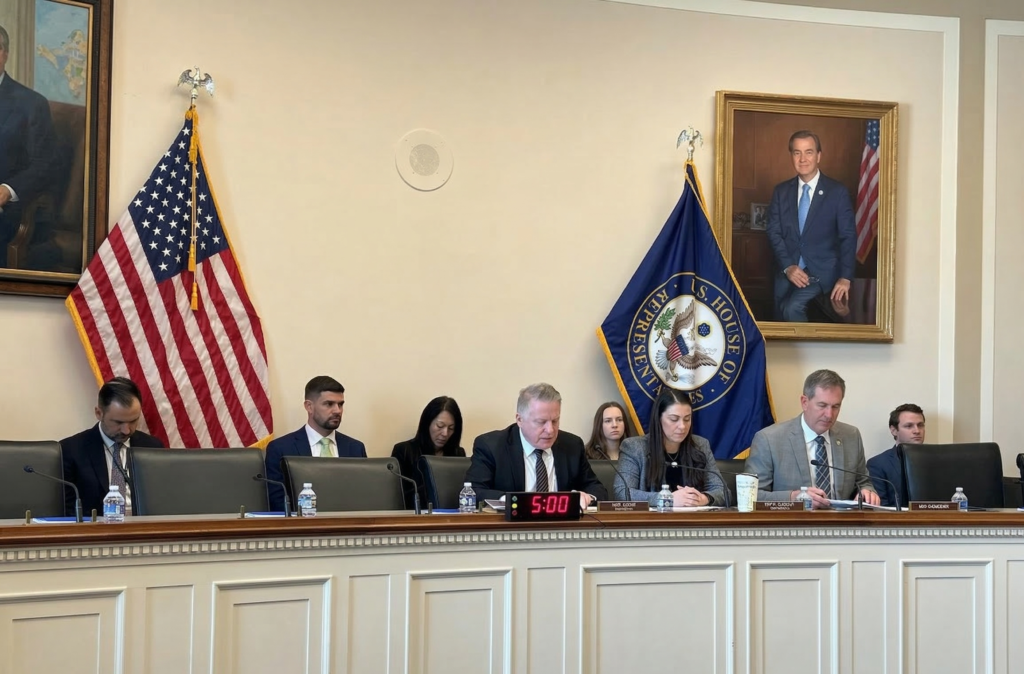
Reflections on the Hearings: Advancing Peace in the DRC and Rwanda Through the Washington Accords

Dorcas George, International Human Rights Legal Practitioner and Humanitarian, originally from Eastern Democratic Republic of the Congo (DRC)
22 JANUARY 2026 U.S. House Hearing - Advancing Peace in DRC and Rwanda in the DRC and Rwanda Through President Trump’s Washington Accords chaired by Congressman Chris Smith
U.S. House of Representatives Africa Subcommittee Hearing: Advancing Peace in DRC and Rwanda in the DRC and Rwanda Through President Trump’s Washington Accords chaired by Congressman Chris Smith (February 2026)

Introduction

I attended two recent U.S. House Congressional hearings on Advancing Peace in the DRC and Rwanda through President Trump’s Washington Accords. As an international human rights legal practitioner and humanitarian originally from Eastern Democratic Republic of the Congo (DRC), I welcomed the seriousness with which Members of Congress and witnesses engaged in questions of peace, mineral governance, humanitarian stability, and regional security.

The Washington Accords represent a meaningful, historic diplomatic development. Renewed and sustained U.S. engagement has reinforced regional mediation, strengthened the principle of territorial integrity, and linked stability to economic integration. These are important steps forward. Durable peace, however, will require implementation that integrates governance reform, accountability, human capital investment, and meaningful community inclusion in addition to economic cooperation.

I. The Strategic Significance of the Accords

The hearings highlighted the importance of stabilizing Eastern Congo, a region central to global supply chains for cobalt, coltan, copper, and other critical minerals. U.S. engagement aims to secure rare earth and other critical minerals, reduce reliance on strategic competitors, while promoting regional economic integration.

Instability in Eastern DRC remains elusive because it is multidimensional. While international tensions play a significant role, internal governance weaknesses, armed group proliferation, institutional fragility, economic opportunism, and local grievances are also key drivers. Addressing cross-border dynamics without strengthening domestic institutions can only offer temporary, fragile stabilization rather than lasting peace.

II. Governance and Institutional Anchoring

Durable peace requires functioning institutions. Weak judicial systems, fragmented security forces with shifting allegiances, corruption, and inconsistent enforcement have allowed cycles of violence to regenerate over decades.

The Strategic Partnership between the United States and the DRC can be strengthened by anchoring it with institutional benchmarks rather than political alignment alone. Clear expectations tied to transparency, anti-corruption safeguards, rule-of-law reinforcement, and measurable governance improvements will strengthen reform incentives while protecting both Congolese citizens and U.S. strategic interests.

III. Human Capital: The Foundational Pillar

The Strategic Partnership appropriately recognizes that cooperation must move beyond mineral extraction and incorporate longer-term investments in human capital, infrastructure, and community benefit-sharing. These investments will bring an enduring stability that will help protect U.S. interests and access to strategic resources.

In conflict-affected mining regions, limited access to education, vocational training, healthcare, and economic opportunity contributes to reliance on substandard and hazardous mining practices. Investment in education systems, workforce development, women’s economic participation, healthcare infrastructure, and local enterprise growth can help address these issues and while improving long-term stability.

IV. Child Protection and Ethical Supply Chains

Addressing child labor in artisanal mining is a critical issue and requires strengthened traceability and transparency mechanisms alongside coordinated international regulatory standards to address it effectively. Regulatory enforcement alone is not enough. It must be accompanied by humanitarian and community development to ensure vulnerable children are in school rather than being forced into the workforce as free labor.

V. Justice, Accountability, and Inclusion

Peace processes are only effective when they integrate accountability mechanisms and inclusive participation. Strengthening judicial capacity, monitoring ceasefire compliance, bolstering survivor-centered support systems, and maintaining transparent oversight structures are examples of beneficial mechanisms that reinforce legitimacy and reduce relapse risk. Inclusion of women leaders, structured civil society institutions, and faith networks also can enhance implementation credibility and strengthen societal buy-in.

Conclusion

The Washington Accords represent a turning point for U.S. policy vis-à-vis the DRC, and is an important diplomatic milestone on a pathway to a brighter, more peaceful and prosperous future for the DRC, while helping the U.S. achieve its strategic resource access and supply chain goals. Long-term success, however, will depend on whether implementation integrates concepts such as institutional strengthening, human capital investment, ethical supply chain governance, accountability mechanisms, and inclusive participation.

From the perspective of Eastern Congo, peace is defined not only by ceasefires, but by functioning institutions, safe communities, legitimate governance, and children in classrooms rather than in mines. A Strategic Partnership that integrates human dignity with economic cooperation will best serve both Congolese and U.S. interests.

Author’s Note

As a Congolese-American international human rights legal practitioner with investigative and humanitarian experience in Eastern DRC, I remain committed to advancing implementation frameworks that translate diplomatic agreements into measurable progress in governance reform and human capital outcomes. Durable peace requires the expertise and diligence of those who deeply understand both local realities and international policy and diplomatic realities.

Translate »